I Thought My Neighbors Wife Was Cheating Until the Truth Changed Everything

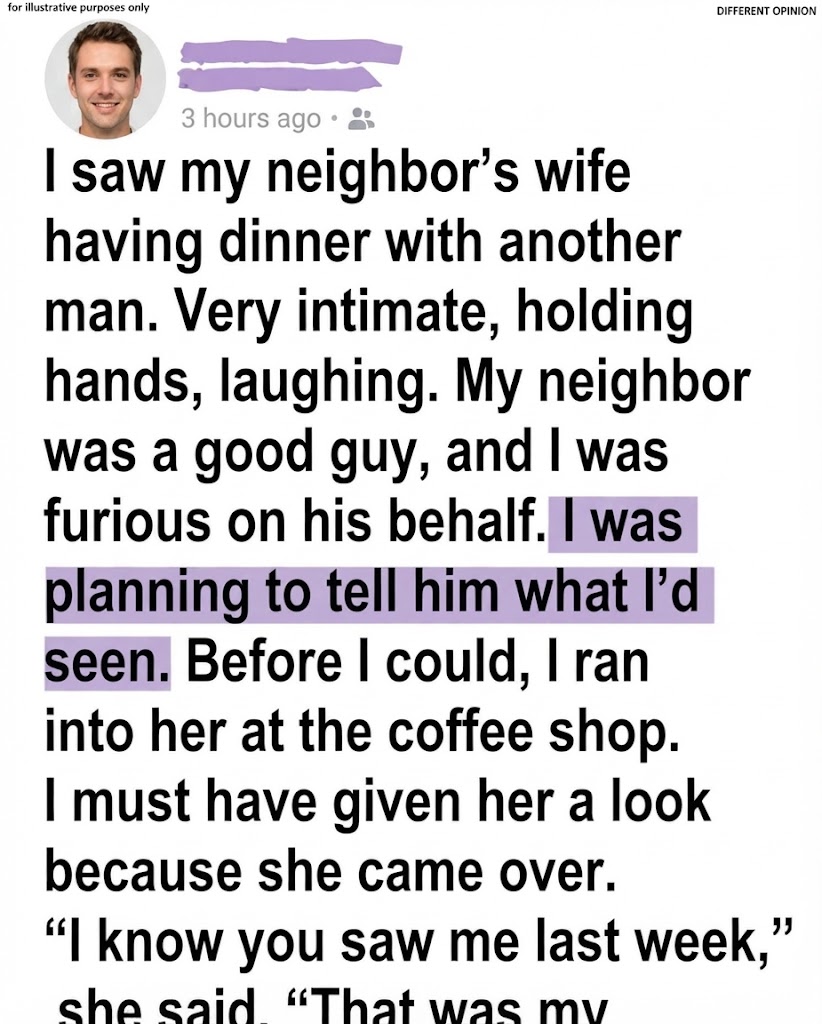
It only took a single glance across a restaurant for me to feel completely certain I understood someone else’s life. The evening had been ordinary—soft music, warm lighting, the quiet clatter of dishes—until I noticed Sarah, my neighbor’s wife, seated in a corner booth with another man. They leaned close, laughing in that effortless way people do when they feel safe and familiar. In that instant, my mind rushed to conclusions, building a full story out of a few seconds of observation, and by the time I stepped back into the cold night air, I was convinced I had uncovered a betrayal.
For days, the image replayed in my head. I thought about her husband, Mark, the kind of neighbor everyone appreciates—the one who shovels shared sidewalks and remembers small details that make people feel seen. I told myself I was standing up for honesty, that silence would make me complicit. The more I rehearsed what I might say, the more justified I felt, not realizing how little I actually knew—only that I believed I was protecting someone from heartbreak.
Then one rainy morning, everything shifted. I ran into Sarah at a quiet coffee shop, and before I could decide whether to avoid the conversation or confront it, she spoke first. She explained that the man I’d seen was her brother visiting from overseas, which was enough to unravel my certainty. But she went further, sharing that she was facing a serious health diagnosis and hadn’t yet found the courage to tell her husband.
The weight of my earlier judgment fell away instantly, replaced by humility. What I had mistaken for secrecy was actually someone searching for strength and support. A week later, she told her husband, and I was asked to simply be present. Watching that moment reminded me how fragile private lives are and how easily assumptions can cause harm. Since then, I’ve carried one lesson above all: what we think we know is often only a fragment, and kindness begins where certainty ends.
What unsettled me most was how convincing my own explanation had felt. I had seen familiarity between two people and supplied the meaning myself. Nothing in that brief restaurant scene had told me who the man was, why he was visiting, or what Sarah was carrying privately. Yet I had treated my interpretation as though it contained all three answers.
Thinking of Mark as a good neighbor had made my judgment feel generous. I believed concern for him justified my certainty. Sarah’s explanation showed me that concern could still become intrusive when it rested on a story I had invented. Her need was not for someone to expose her. It was for the strength to share something painful with her husband.
Being present a week later felt very different from the confrontation I had imagined. I was no longer the person who thought she had discovered a secret. I was simply someone witnessing a difficult conversation. That change in my role made the lesson real: sometimes the most helpful thing we can offer is space, patience, and an admission that we do not know enough to judge.