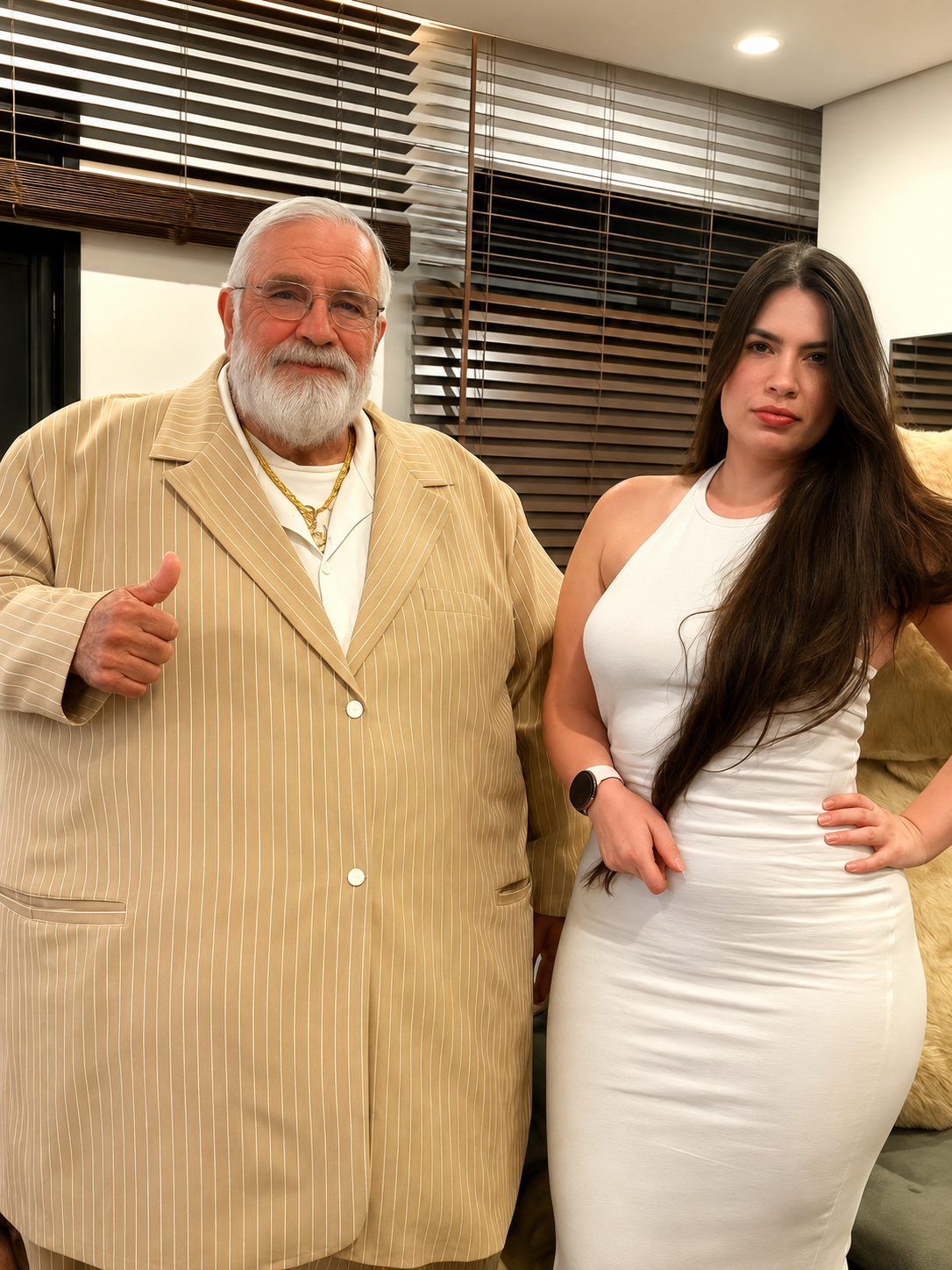
The Diamond Cage: Why the World’s Richest Bride Trashed Her Billion-Dollar Vows to Find Real Power
The wedding of the century had been meticulously engineered to be the ultimate display of earthly power. Every detail had been perfected months in advance by teams of planners, designers, security specialists, and luxury consultants whose sole purpose was to ensure nothing—not even the weather—could diminish the spectacle. When Clara Vance stepped through the towering bronze doors of the Neo-Gothic cathedral in a breathtaking gown woven with genuine silver thread and adorned with more than five thousand hand-sewn pearls, the crowd erupted into thunderous applause.
Outside, thousands of spectators strained against velvet barriers hoping for a single glimpse of the bride. Helicopters circled overhead while television crews broadcast every second live to audiences across the globe. Luxury brands competed for advertising space during the event as social media exploded with admiration.
The flashes from hundreds of cameras became so relentless they resembled the pulsing lights of an exclusive nightclub.
To millions watching from their phones and televisions, Clara wasn’t simply getting married.
She was becoming royalty.
At twenty-nine years old, she had transformed from the daughter of a middle-school teacher and a local mechanic into the wife of Julian Vane—the billionaire investor whose technology empire, private equity firms, and global real estate portfolio controlled assets larger than the economies of several developing nations.
Business magazines called Julian “The Architect of Modern Wealth.”
Financial journalists described him as the man who could influence stock markets with a single interview.
His private jet fleet numbered six aircraft.
His homes stretched across four continents.
His annual charity gala attracted presidents, royalty, Hollywood celebrities, and Nobel Prize winners alike.
People admired him.
Some feared him.
Everyone knew his name.
To the outside world, Clara had achieved what countless people secretly dreamed about.
She had escaped financial uncertainty forever.
No more budgeting.
No more student loans.
No more worrying about rent or unexpected bills.
Her new home wasn’t simply a mansion—it was a modern palace overlooking the Mediterranean Sea, complete with an underground art gallery, an Olympic-sized indoor pool, a twelve-car showroom, and a staff of nearly forty employees.
Every closet contained designer clothing worth more than the average family’s annual income.
Rare jewelry arrived weekly from Paris and Geneva.
Luxury cars appeared in the driveway without her ever requesting them.
If she admired something in passing, it quietly appeared days later wrapped in silk ribbons.
Friends from her old life joked that she’d won the greatest lottery in history.
But lotteries only reveal the prize.
They rarely reveal the cost.
The first signs were so subtle that Clara almost ignored them.
Julian preferred choosing her clothing before public appearances.
He insisted certain colors better reflected “the Vane image.”
At first, she interpreted it as thoughtful guidance.
Then he began correcting how she spoke during interviews.
He suggested she smile less because “mystery photographs better.”
He encouraged her to distance herself from childhood friends because they “didn’t understand the responsibilities of wealth.”
Whenever she questioned his advice, Julian smiled patiently.
“I’m protecting you,” he would say.
“People expect perfection.”
Gradually, those suggestions became expectations.
Expectations became rules.
Rules became invisible walls.
Within a year, Clara realized she hadn’t made a truly independent decision in months.
Her daily schedule arrived every morning from Julian’s executive assistant.
Breakfast meetings.
Charity events.
Fashion fittings.
Private dinners.
Fundraisers.
Everything planned.
Everything timed.
Everything approved.
Security officers accompanied her everywhere, supposedly for protection.
Yet she noticed they quietly reported her movements back to Julian.
If she spent longer than expected at a bookstore or café, he already knew before she returned home.
Her phone synchronized with the family’s private network.
Her purchases were monitored by accountants.
Her travel required advance approval from security coordinators.
Even spontaneous walks along the beach required an escort.
The luxury surrounding her had become almost surreal.
The marble floors reflected sunlight like mirrors.
Crystal chandeliers sparkled above banquet tables capable of seating fifty guests.
Fresh orchids filled every hallway.
Masterpieces worth tens of millions decorated the walls.
Yet despite living among unimaginable beauty, Clara often felt strangely empty.
The mansion echoed with silence.
Staff members spoke politely but never personally.
Conversations revolved around appearances, investments, and influence.
Nobody asked how she felt.
Only how she looked.
One afternoon she wandered into a forgotten library hidden inside the estate.
Unlike the polished reception rooms, dust coated the shelves.
Old leather-bound books lined the walls from floor to ceiling.
For the first time in months, Clara sat completely alone.
She realized something unsettling.
She couldn’t remember the last time she had laughed uncontrollably.
Not politely.
Not for photographers.
Not during rehearsed conversations.
Real laughter.
The kind that leaves your stomach aching.
That evening she looked around the enormous dining table where she and Julian sat opposite each other, separated by nearly twenty feet of polished mahogany.
The meal had been prepared by an award-winning chef.
Fine china.
Crystal glasses.
Silver cutlery.
Perfect presentation.
Yet neither spoke for almost twenty minutes.
Finally Clara broke the silence.
“Are you happy?”
Julian looked surprised.
“I have everything.”
“That’s not what I asked.”
He studied her quietly.
“Happiness is temporary,” he replied.
“Power lasts.”
Those four words lingered in her mind long after dinner ended.
Power lasts.
Was that what their marriage had become?
A merger instead of a partnership?
Over the following months, Clara quietly began reconnecting with the world she had left behind.
She volunteered anonymously at a community literacy program under a different name.
She spent afternoons helping children learn to read.
No cameras.
No interviews.
No designer gowns.
Just ordinary conversations with families who measured wealth in time together rather than financial statements.
Ironically, those modest classrooms made her feel richer than the marble halls ever had.
For the first time in years, she was valued for who she was—not for the surname attached to her.
The contrast became impossible to ignore.
At home, every interaction was strategic.
Outside those gates, people smiled without expecting anything in return.
Clara began keeping a journal, writing one sentence every evening:
What decision today was truly mine?
Some nights she couldn’t think of a single answer.
The realization frightened her more than any financial risk ever could.
Then came the charity gala that would change everything.
More than a thousand influential guests filled the grand ballroom.
Journalists praised Clara as “the perfect billionaire wife.”
Standing beneath dazzling chandeliers while applause echoed around her, she suddenly understood the truth.
She wasn’t standing on a stage.
She was standing inside a cage.
A magnificent one.
Built from diamonds instead of steel.
Decorated with luxury instead of locks.
But a cage nonetheless.
Days later, Clara quietly packed a single suitcase.
She left behind couture gowns worth millions, priceless jewelry locked inside private vaults, and the lavish lifestyle the world envied.
She didn’t leave because she hated wealth.
She left because she had discovered that wealth without freedom can become another form of imprisonment.
As she walked out through the estate’s towering gates, reporters would later speculate endlessly about the reasons behind her departure. Some claimed there had been secret affairs. Others suggested financial disputes or family conflicts.
The truth was far simpler.
She had finally realized that real power isn’t measured by the size of a bank account, the square footage of a mansion, or the influence of a famous surname.
Real power is the freedom to make your own choices, to speak with your own voice, and to live according to your own values.
For years, the world believed Clara Vance had married into the greatest fortune imaginable.
Only she knew that the greatest fortune she ever reclaimed was herself.