Hailstorm Turned Streets Into Ice Fields Overnight
It started as an ordinary afternoon. The sky was overcast, the wind picked up slightly, and weather forecasts mentioned the possibility of thunderstorms. Most residents expected nothing more than a brief shower before the sun returned. Cars remained parked outside, children played in nearby yards, and people continued with their daily routines. There was little reason to believe that within the next thirty minutes, the neighborhood would experience one of the most destructive hailstorms many had ever witnessed.
At first, the rain arrived gently. Small droplets splashed against windows, rooftops, and sidewalks. The familiar sound of rainfall created a sense of calm, something people had experienced countless times before. But then everything changed. The steady rhythm of rain suddenly transformed into loud, violent impacts. Tiny pellets of ice began falling from the clouds, quickly growing larger and heavier until they slammed into every exposed surface with tremendous force.
The hailstorm intensified at an astonishing speed. Within only a few minutes, the sky released thousands of massive hailstones that crashed onto roads, rooftops, vehicles, and gardens. The deafening noise echoed throughout the neighborhood. It sounded like countless rocks being thrown from the sky, striking metal roofs, breaking tree branches, and bouncing across pavement. Conversations stopped as people rushed toward windows, shocked by what they were witnessing.
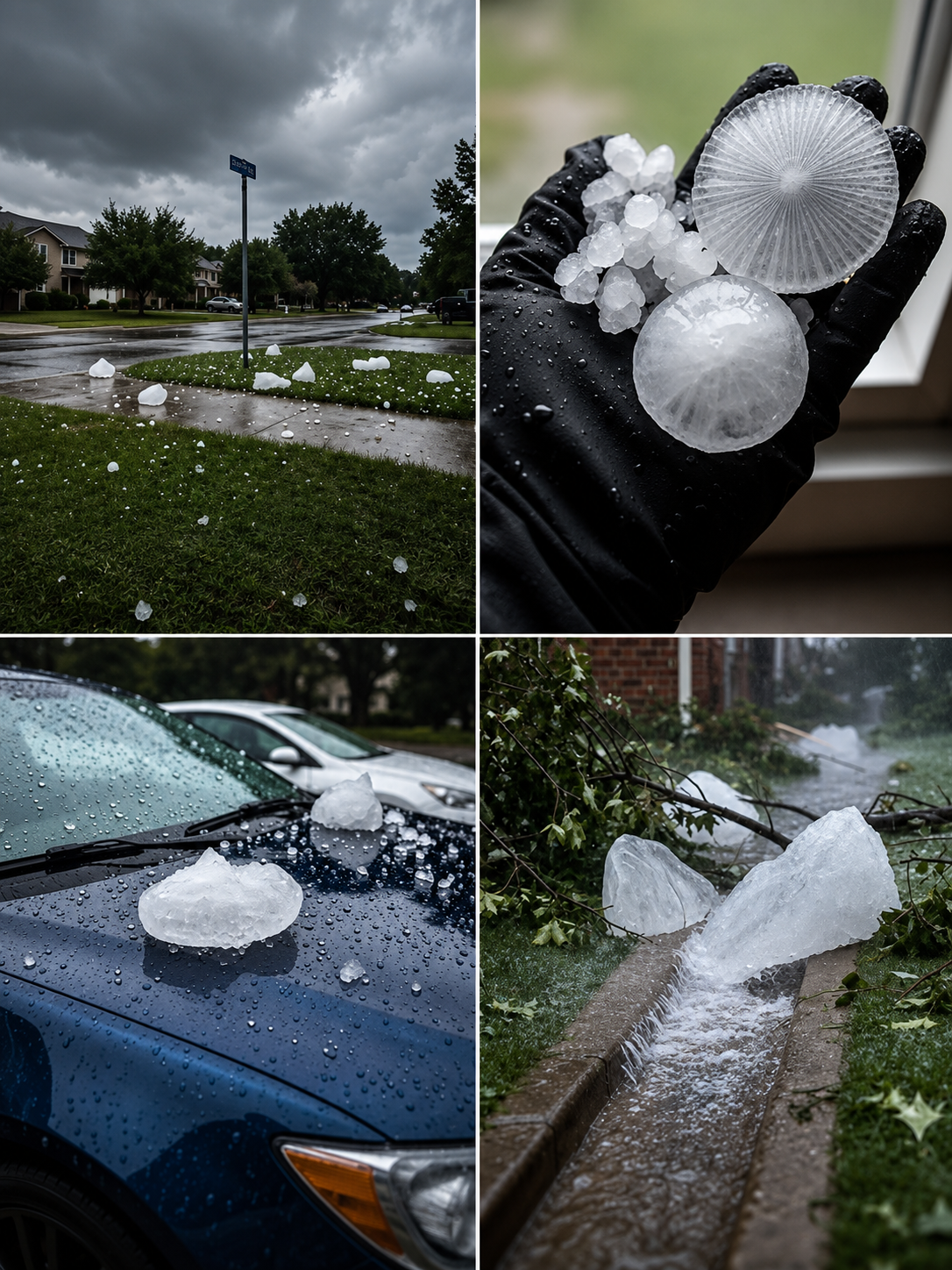
Outside, the streets rapidly changed appearance. Instead of wet pavement reflecting the gray sky, they became scattered with large chunks of white ice. Lawns that had been green only moments earlier looked as though they had been dusted with snow, despite it being far too warm for winter weather. Sidewalks disappeared beneath layers of hailstones, creating slippery surfaces that were dangerous to walk on. Water mixed with ice, flowing into gutters that quickly became clogged.
Many hailstones were much larger than anyone expected. Some measured several inches across, nearly the size of baseballs or grapefruits. Their unusual size made them especially destructive. Every impact carried tremendous energy, enough to dent vehicle hoods, shatter windows, crack roof shingles, and destroy outdoor furniture. Cars parked in driveways suffered extensive cosmetic damage in just a matter of minutes. Windshields developed spiderweb-like cracks, mirrors broke apart, and paint was chipped away by repeated impacts.
Residents scrambled outside in desperate attempts to protect their belongings. Some tried covering vehicles with blankets, cardboard, or tarps, while others attempted to move cars into garages. Unfortunately, the storm moved faster than anyone could react. By the time people reached their vehicles, the damage had often already been done. The hail continued falling relentlessly, forcing many to retreat indoors for their own safety.
Trees also bore the full force of the storm. Healthy branches snapped under repeated strikes, while countless leaves were ripped away, covering roads and sidewalks in thick green piles. Flower gardens that had taken months to cultivate were flattened almost instantly. Delicate blossoms disappeared beneath layers of ice, and vegetable gardens were shredded beyond recognition. Farmers in nearby rural areas faced even greater losses, as entire crops could be destroyed within a single storm, threatening months of hard work and future income.
The atmosphere inside homes was filled with uncertainty. Families gathered near windows, watching nature unleash its incredible power. Children were fascinated by the enormous hailstones bouncing across yards, while adults worried about roof damage, broken windows, and the safety of loved ones caught outdoors. Every loud crash raised new concerns about what might have been struck. The unpredictability of the storm made it especially frightening because no one knew how much worse it would become or when it would finally end.
As the hail accumulated, drainage systems struggled to keep up. Gutters overflowed with water and ice, while storm drains became blocked by piles of frozen debris. Streets quickly flooded as water had nowhere to go. Combined with the hailstones already covering the ground, the flooding created dangerous driving conditions. Emergency vehicles had difficulty reaching damaged areas, and motorists who attempted to continue driving risked losing control on the slick roads.
Meteorologists explain that hail forms inside powerful thunderstorm clouds when strong updrafts carry raindrops high into the atmosphere, where temperatures are well below freezing. The droplets freeze into small ice pellets. These pellets continue circulating within the storm, collecting additional layers of ice each time they pass through regions containing supercooled water. Eventually, when the hailstones become too heavy for the storm’s updrafts to support, they fall rapidly toward the ground. In particularly intense storms, these hailstones can grow to extraordinary sizes capable of causing severe damage.
The storm also had an emotional impact on the community. The constant pounding of ice against homes created feelings of helplessness among many residents. Unlike heavy rain or strong winds, there was little anyone could do to stop the destruction. Families simply waited, hoping their roofs would hold, windows would remain intact, and everyone would remain safe until the storm passed.
After what felt like an eternity—but was actually only around fifteen to twenty minutes—the hail gradually became smaller. The loud impacts softened into ordinary rainfall before finally stopping altogether. Slowly, people emerged from their homes to assess the damage. The silence that followed was almost surreal. Instead of hearing crashing hail, they heard dripping water, distant emergency sirens, and neighbors calling to one another.
The neighborhood looked dramatically different than it had before the storm. Thick piles of hail remained scattered across streets and lawns, creating the illusion of a sudden winter landscape in the middle of a warm season. Cars displayed fresh dents and broken glass. Fallen branches blocked sidewalks and driveways, while damaged roofs and shattered skylights required immediate repairs. Insurance companies soon received hundreds of claims from affected homeowners and vehicle owners.
Despite the destruction, the community quickly came together. Neighbors helped clear fallen branches, checked on elderly residents, and assisted families whose homes had suffered the worst damage. Volunteers worked together to remove debris, while emergency crews restored blocked roads and responded to urgent repair needs. The storm became a reminder that although nature can be incredibly destructive, communities often show remarkable resilience during difficult times.
In the days that followed, meteorologists analyzed the storm’s intensity, noting that its powerful updrafts and rapidly changing atmospheric conditions had created ideal circumstances for producing exceptionally large hail. For many residents, however, scientific explanations could not erase the memory of witnessing giant chunks of ice falling from the sky with overwhelming force. What began as an ordinary rainy afternoon became an unforgettable event that demonstrated just how quickly severe weather can transform a peaceful neighborhood into a landscape of ice, damage, and recovery.
The hail eventually melted, the roads were repaired, and damaged homes were restored. Yet the experience left a lasting impression on everyone who lived through it. It served as a powerful reminder that nature’s most dramatic displays often arrive with little warning, and that preparation, awareness, and community support remain the strongest defenses against the unexpected forces of the natural world.