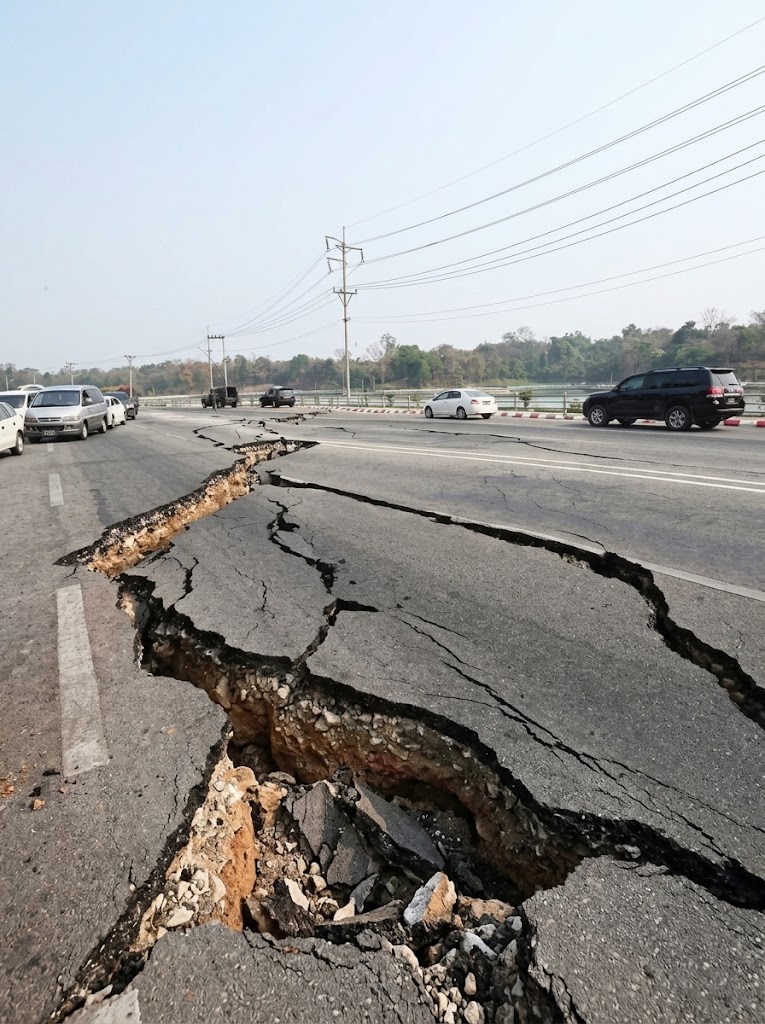

Strong Earthquake Strikes Parts of Southeast Asia as Communities Respond with Resilience
LASHIO, Myanmar — A powerful earthquake struck parts of Southeast Asia, sending violent shockwaves across international borders, rattling high-rise buildings, and causing widespread concern across Myanmar, southwestern China, and northern Thailand.
The major seismic event was centered in eastern Myanmar’s northern Shan State near the strategic crossroads city of Lashio. Shaking was felt across hundreds of kilometers, reaching residential high-rises in China’s Yunnan Province and bustling tourist and urban centers across northern Thailand, including Chiang Mai and Chiang Rai.
Despite the abrupt shock, power outages, and infrastructural damage reported across rural towns and transit corridors, local communities, civilian volunteers, and emergency personnel mobilized rapidly to search damaged structures, establish emergency aid shelters, and restore essential lifelines.
Moment of Impact: A Morning Shattered by Violent Ground Motion
The tremor occurred at a relatively shallow focal depth, which geoscientists note significantly amplifies the surface ground shaking felt by nearby communities. Eyewitnesses in Lashio described a deep, rumbling roar followed by abrupt horizontal and vertical swaying that lasted for roughly forty seconds.
In Lashio, an urban center of more than 130,000 residents nestled in the Shan Hills, the earthquake tore across residential and commercial districts. Stucco facades peeled from older multi-story masonry structures, brick perimeter walls collapsed into narrow side streets, and tiles cascaded from rooftops.
“The earth felt like it was rolling beneath our feet like waves on water,” recounted Daw Nan Khin, a shopkeeper near Lashio’s central market. “First came the deafening sound from the hills, and then the shelves collapsed. Everyone ran into the streets shouting for their families. Power lines were swaying wildly overhead.”
Dust clouds billowed over parts of the city as utility poles leaned dangerously and transformers blew out, plunging several wards into sudden silence broken only by the sirens of civic ambulances and the shouts of neighbors checking on elderly residents.
Cross-Border Shaking: Yunnan Province and Northern Thailand
Because seismic waves do not respect national boundaries, the energy radiated swiftly north into China’s Yunnan Province and southward across the undulating mountains of the Golden Triangle into Thailand.
Across the Chinese Border in Yunnan
In border prefectures of Yunnan, including Dehong and Lincang, residents in mid- and high-rise apartment complexes reported pronounced swaying. Light fixtures swung pendulously, and automated seismic early-warning systems delivered countdown alerts via smartphones, televisions, and community loudspeakers across provincial towns.
Schoolchildren in border townships were evacuated to open sports fields under well-rehearsed civil defense protocols. Chinese emergency management departments in Kunming reported that while structural damage along the immediate border remained limited largely to non-load-bearing cracks and sporadic falling plaster, engineering inspection teams were immediately deployed to examine regional reservoirs, bridges, and mountain highway tunnels prone to secondary rockfalls.
Rumbles Across Northern Thailand
Hundreds of kilometers to the south, across northern Thailand’s provinces of Chiang Mai, Chiang Rai, and Mae Hong Son, the tremor caused high-rise buildings and department stores to shudder.
In Chiang Mai, hotel guests and office workers evacuated onto roads and hotel parking lots as swimming pools sloshed over their edges and chandeliers swung vigorously.
“We felt a slow, rolling sway that lasted quite a while,” said Somchai Prasert, a hotel manager in central Chiang Mai. “Staff calmly directed guests down the fire stairs. Fortunately, there were no injuries, but it was a sobering reminder of the complex geological faults running north of our borders.”
Thailand’s Department of Disaster Prevention and Mitigation (DDPM) issued immediate advisories, instructing local district officers to inspect ancient temples, hospitals, and elevated overpasses for any hidden structural distress.
The Geological Trigger: The Tectonic Crucible of Southeast Asia
Southeast Asia sits at one of the world’s most intricate tectonic intersections, driven by the ongoing collision between the Indian and Eurasian tectonic plates.
While the famous Sagaing Fault runs north-to-south through central Myanmar, accommodating much of the northward strike-slip motion of the Indian Plate, northern Shan State and the Myanmar-China border region are cut by an intricate network of strike-slip and conjugate fault systems. These include the Kyaukkyan Fault, the Nam Ting Fault, and several localized fault branches that run directly through the Shan Plateau.
According to preliminary regional seismic assessments:
-
Fault Mechanism: The tremor exhibited a strike-slip focal mechanism, where crustal blocks grind horizontally past one another along pre-existing fault lines.
-
Focal Depth: Estimated between 10 to 15 kilometers, placing it firmly in the “shallow crustal” category that creates intense, localized peak ground acceleration.
-
Aftershock Sequence: Over two dozen noticeable aftershocks were recorded within the first 12 hours, keeping residents and rescue teams in open spaces out of caution.
Geologists emphasized that shallow strike-slip earthquakes in mountainous terrains create dual hazards: structural failure in unreinforced masonry buildings and sudden, catastrophic slope failures across vulnerable roads.
Community Resilience and Grassroots Mobilization
While the physical impact was acute, the humanitarian narrative following the tremor has been defined by immediate community cohesion and grassroots resilience.
       IMMEDIATE CRISIS RESPONSE TIMELINE
 ──────────────────────────────────────────────────
 Hour 00:00   Main shock strikes; telecommunications and
              power grids severed in regional pockets.
 Hour 01:15   Local monastic compounds and community centers
              open open-air courtyards as staging posts.
 Hour 02:30   Civilian volunteer rescue teams mobilize with
              heavy equipment to clear landslide blockages.
 Hour 06:00   Cross-border aid coordination centers established;
              field clinics treat cuts, fractures, and shock.
 Hour 12:00   Water purification units deployed; structural safety
              inspections launched for essential infrastructure.
In Shan State, where formal infrastructure can face logistical constraints, local monastic networks, community welfare associations, and youth volunteers stepped forward as the first line of defense. Monasteries and church compounds with wide, open courtyards quickly converted their grounds into triage and distribution centers, offering hot meals, bottled water, and blankets to families hesitant to return to homes with cracked masonry.
Local volunteer rescue societies—long experienced in navigating regional crises—deployed pickup trucks outfitted with hydraulic cutters, winches, and first-aid kits. They worked along hillside roads outside Lashio where boulders and earth slides had choked transport arteries, using bulldozers and manual labor to clear single-lane paths for emergency ambulances.
“No one waited for external orders,” said Sai Aung, a volunteer with a Lashio youth humanitarian group. “Neighbors checked on neighbors. When we saw a collapsed boundary wall trapping an elderly woman’s entryway, twelve young men gathered within five minutes to lift the debris and escort her to safety. That is who we are.”
Infrastructure, Logistics, and Cross-Border Coordination
The earthquake presented significant logistical hurdles. Mountain passes connecting northern Shan State to China’s border trade gates experienced minor fissures and boulder obstructions, temporarily halting commercial freight lines.
Utility crews worked through aftershocks to repair severed distribution wires, restoring electricity to core hospitals and water-pumping stations by late evening. Regional telecommunication carriers deployed mobile cellular towers on trucks to restore dropped signals across remote valleys, allowing anxious family members to establish contact across borders.
| Affected Region | Primary Impact Reported | Immediate Response Action |
| Northern Shan State (Lashio) | Structural wall cracks, power disruptions, localized road debris | Volunteer rescue deployment, monastery evacuation shelters, road clearance |
| Yunnan Province (Dehong / Lincang) | High-rise swaying, superficial plaster damage, landslide risk | Automated early-warning alerts, civil defense drills, reservoir/tunnel safety checks |
| Northern Thailand (Chiang Mai / Rai) | High-rise evacuations, sloshing pools, minor cosmetic cracks | DDPM emergency assessments, heritage temple engineering surveys |
In international circles, regional humanitarian groups and ASEAN disaster management agencies placed technical teams on standby, monitoring seismic data and coordinating with localized civil society organizations to channel water purification kits, hygiene parcels, and temporary tarpaulins for rainy season protection.
Looking Ahead: Fortifying Infrastructure Against Future Tremors
As aftershocks gradually taper off, the focus is shifting toward rigorous structural auditing and sustainable recovery.
Engineers emphasize that the region’s recurrent seismicity demands stricter adherence to seismic building codes, particularly for schools, medical centers, and residential housing blocks built from unreinforced brick and concrete block. Community leaders are also advocating for expanded public education campaigns on earthquake preparedness, emphasizing “Drop, Cover, and Hold On” protocols that save lives during the initial seconds of violent shaking.
Despite the fear that rattled several nations, the quick actions of everyday citizens across Lashio, southwestern China, and northern Thailand revealed an enduring strength. Amid fractured earth and swinging buildings, it was the rapid, compassionate response of interconnected communities that held the region together.