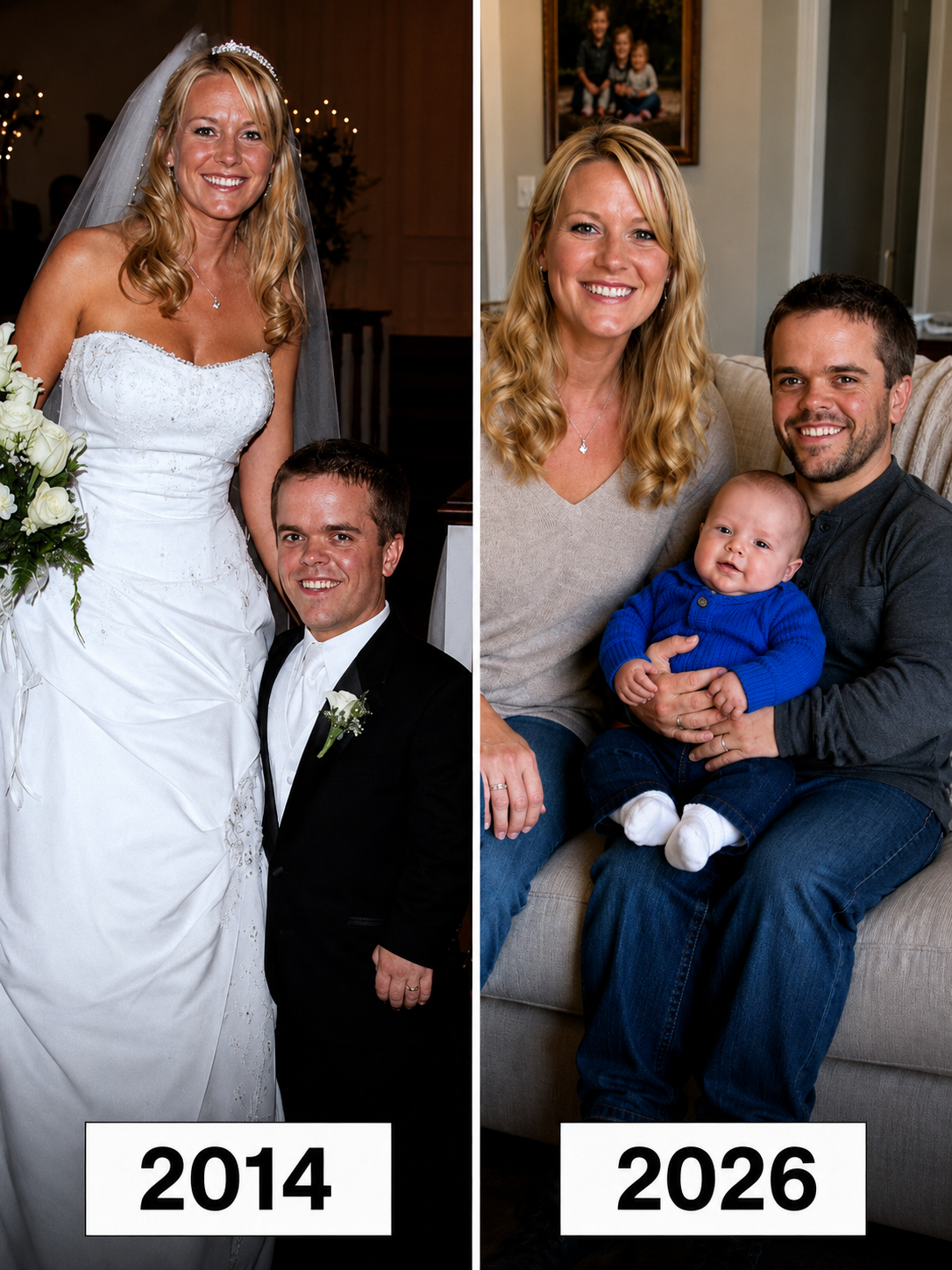
My Family Laughed at Me for Marrying a Man Because of His Height – When He Became Rich, They Came Asking for $20,000, and He Taught Them a Lesson They’ll Never Forget
I’ll never forget the look on my mother’s face at my wedding twelve years ago.
It wasn’t happiness. It wasn’t pride.
It was embarrassment.
The kind that made her force a smile while silently wishing the ceremony would end as quickly as possible.
The reason was standing beside me at the altar.
My husband, Jordan.
Jordan was born with achondroplasia, a form of dwarfism. He stood just over four feet tall, but to me, he was the tallest man in every way that mattered. He was intelligent, compassionate, hardworking, and endlessly patient. Yet my parents couldn’t see any of that.
To them, his height defined him.
My father used to call him “half a man.”
My mother constantly whispered that I was “throwing my life away.”
Friends and relatives followed their lead. Every family gathering became another opportunity for jokes disguised as humor.
“You’ll have to buy children’s furniture,” my uncle laughed one Thanksgiving.
“At least he’ll never hit his head on a doorway,” my cousin added.
Everyone laughed.
Everyone except Jordan.
He simply smiled politely and continued eating.
That was who he was.
He never argued.
Never shouted.
Never tried to prove anyone wrong.
He believed actions spoke louder than words.
My father didn’t even try to hide his cruelty during our wedding reception.
While giving his toast, he raised his glass and laughed.
“I hope your future kids actually inherit their mother’s height… otherwise they’ll need step stools just to reach the dinner table!”
The guests laughed nervously.
I wanted to disappear.
Jordan gently squeezed my hand beneath the table.
“It’s okay,” he whispered.
“No,” I whispered back.
“It’s not.”
But he simply smiled.
“It will be.”
I didn’t understand what he meant until years later.
Jordan had grown up in an orphanage.
His biological parents abandoned him shortly after birth because they couldn’t accept his condition.
He rarely spoke about those years.
When he did, he never sounded bitter.
“They gave me life,” he once said.
“The people at the orphanage taught me how to live.”
Despite every obstacle, Jordan excelled in school.
Scholarships paid for architecture school.
He graduated at the top of his class.
Then he worked harder than anyone I’d ever met.
While other architects chased recognition, Jordan focused on solving problems.
He designed affordable homes, accessible buildings, and community centers that won praise for their practicality.
Eventually, he opened his own architectural firm.
It wasn’t glamorous at first.
There were months when we barely covered the rent.
I worked two jobs while Jordan worked sixteen-hour days drawing plans, meeting clients, and learning everything about running a business.
Not once did he complain.
Whenever I apologized for our struggles, he’d smile.
“We’re building something bigger than money.”
He was right.
Meanwhile, my parents continued living as though appearances were everything.
They drove luxury cars they couldn’t afford.
Hosted expensive parties.
Constantly reminded everyone how successful they were.
Whenever they invited us over, Jordan became the evening’s entertainment.
My mother once asked him to stand beside my seven-year-old nephew so guests could “see who was taller.”
She laughed.
Jordan laughed politely too.
Later that night, I cried in the car.
“Why don’t you ever stand up for yourself?” I asked.
He looked out the window.
“Because people reveal more about themselves than about me.”
I never forgot those words.
Over time, I stopped visiting.
Phone calls became shorter.
Holiday dinners became excuses.
My parents complained that I was distancing myself.
They never admitted why.
For twelve years, they never apologized.
Not once.
Then life changed overnight.
My parents owned a chain of furniture stores.
For years, business was booming.
But poor investments, mounting loans, and reckless spending finally caught up with them.
Within months, creditors came calling.
Their stores closed.
Employees quit.
Their luxury cars were repossessed.
The vacation home was sold.
Friends who once admired them disappeared.
Suddenly, the people who always claimed money couldn’t buy happiness discovered that losing it certainly brought misery.
Around that same time, Jordan’s company landed the largest commercial design contract in the firm’s history.
The project made headlines across the state.
His business was suddenly worth millions.
Ironically, the same newspapers that celebrated Jordan’s success were read by my parents over breakfast.
They knew exactly where to find us.
Last Tuesday, our doorbell rang.
When I opened it, I almost didn’t recognize them.
My father looked older.
My mother’s expensive clothes had been replaced with simple ones.
Their confidence had vanished.
Instead of arrogance, there was desperation.
“Can we come in?” my mother asked quietly.
Jordan appeared behind me.
“Of course,” he said warmly.
I couldn’t believe it.
After everything they’d done?
He welcomed them inside.
He made tea.
He served homemade cookies.
He listened patiently while they explained how banks were preparing to seize their condominium.
How debts had piled up.
How they needed exactly twenty thousand dollars to survive.
Not once did they apologize.
Not once did they acknowledge twelve years of cruelty.
They simply assumed Jordan would rescue them.
After nearly two hours of listening, Jordan nodded thoughtfully.
“I understand.”
He stood.
Walked calmly to his office.
Returned a minute later holding a check.
Twenty thousand dollars.
My mother’s eyes filled with relief.
She reached forward eagerly.
Jordan gently pulled it back.
“You can have this,” he said calmly.
“But only if you agree to one condition.”
Silence filled the room.
“What condition?” my father asked nervously.
Jordan looked directly at both of them.
“For twelve years,” he said softly, “you measured my worth by my height.”
Neither of them spoke.
“You laughed at me.”
“You mocked my childhood.”
“You insulted my family.”
“You embarrassed my wife.”
“You never apologized.”
He placed the check on the coffee table.
“My condition is simple.”
He slid another piece of paper beside it.
It wasn’t a contract.
It was a handwritten letter.
“I want each of you to write, in your own words, every cruel thing you’ve ever said to me.”
My parents stared at him.
Then he continued.
“Not because I need revenge.”
“But because I need you to acknowledge what you did.”
“I also want you to write personal apology letters—not just to me, but to my wife. She spent twelve years choosing between the people who raised her and the man she loved.”
My mother’s eyes began to water.
Jordan wasn’t finished.
“And one more thing.”
“If you ever hear someone mocking another person because of a disability, appearance, or circumstance, I expect you to speak up.”
“Not stay silent.”
“Not laugh.”
“Speak up.”
My father lowered his head.
For the first time in my life, I saw genuine shame.
Not embarrassment.
Shame.
After several long minutes, my mother whispered,
“We don’t deserve your forgiveness.”
Jordan nodded.
“No.”
“You don’t.”
She looked confused.
“But forgiveness isn’t earned.”
“It’s given.”
She burst into tears.
My father quietly asked for a pen.
For the next hour, neither of them said much.
They simply wrote.
Sometimes they stopped because tears blurred the ink.
Sometimes they crossed out sentences and started over.
When they finished, my father handed Jordan the letters.
“I was cruel,” he admitted.
“I mistook pride for strength.”
“I judged a man by something he never chose.”
“My greatest failure wasn’t losing my business.”
“It was losing my humanity.”
My mother struggled to speak.
“I spent years worrying about what other people thought.”
“I forgot to care about who my daughter loved.”
“I’m ashamed.”
Jordan read both letters silently.
Then he smiled.
Not triumphantly.
Kindly.
He handed my father the check.
“No loans.”
“No interest.”
“No repayment.”
My parents looked stunned.
“Why?” my father asked.
Jordan folded the letters carefully.
“Because I don’t want you to remember me as the man who refused to help.”
“I want you to remember me as the man you underestimated.”
Months later, they paid every dollar back voluntarily.
Not because Jordan asked.
Because they wanted to.
More importantly, they changed.
At family gatherings, my father was the first to stop insensitive jokes.
My mother volunteered with organizations supporting people with disabilities.
When someone mocked another person’s appearance, they spoke up immediately.
Their transformation wasn’t perfect.
But it was real.
One evening, years later, my father watched Jordan playing basketball with our son in the driveway.
He smiled quietly.
“You know,” he said to me, “I spent years thinking your husband was a small man.”
He paused.
“I’ve never met anyone bigger.”
I looked across the yard as Jordan laughed while our son climbed onto his shoulders.
For twelve years, people measured him in inches.
But true character has never been measured by height.
It’s measured by grace, humility, and the ability to show kindness—even to those who once showed you none.
And that was the lesson my family would never forget.