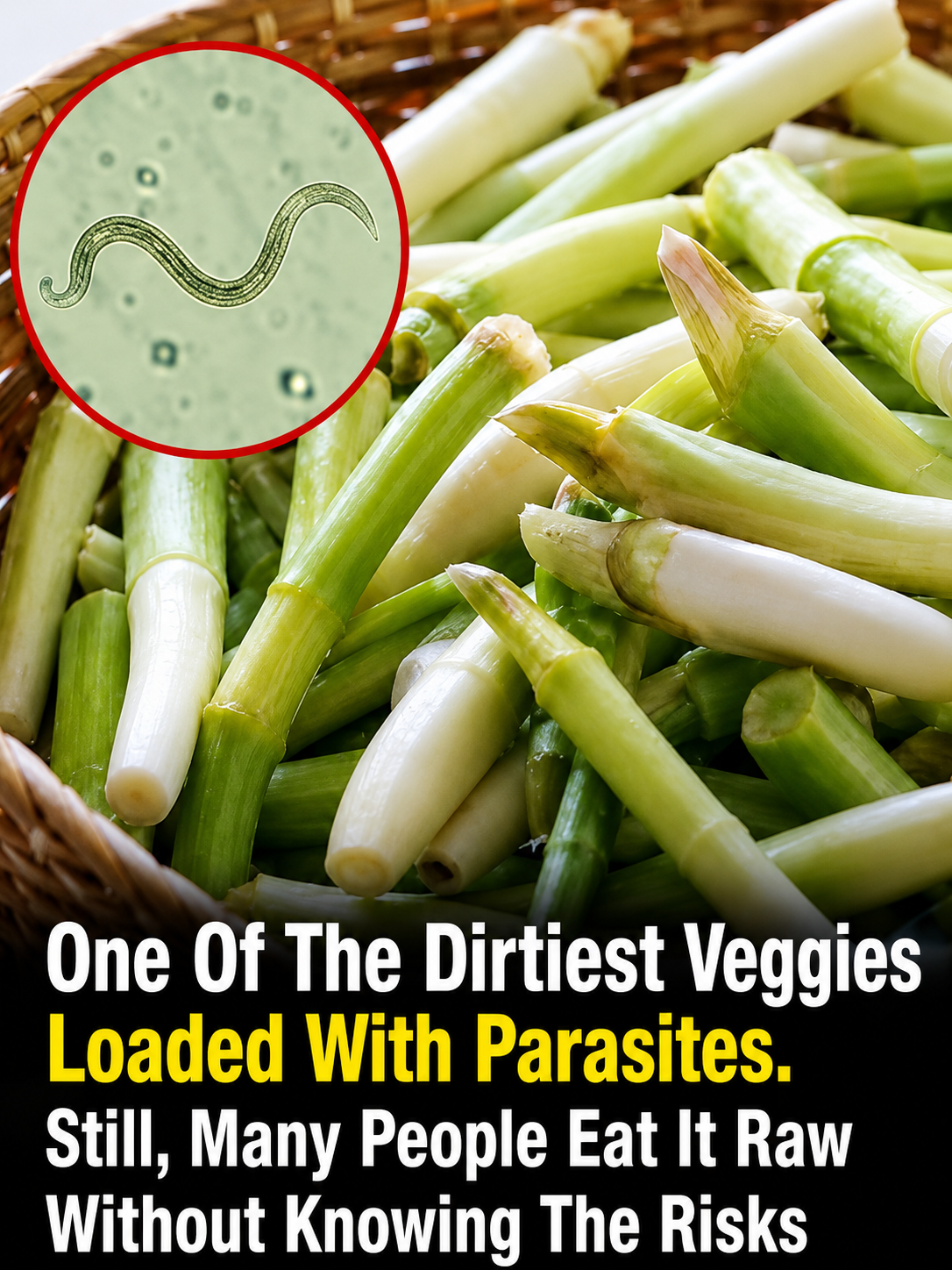
“One Of The Dirtiest Veggies Loaded With Parasites. Still, Many People Eat It Raw Without Knowing The Risks.”
Although the message is eye-catching, it should be understood carefully. The image is meant to warn people about food safety rather than prove that every green onion is contaminated with parasites. Below is a detailed explanation of what the picture is communicating and what people should actually know.
At first glance, the photograph shows a basket filled with freshly harvested green onions. These vegetables are widely used in many cuisines around the world, including Asian, European, and American dishes. Green onions are commonly eaten raw in salads, sandwiches, spring rolls, garnishes, and dipping sauces because of their crisp texture and mild onion flavor. Since they often grow close to the soil, however, they can easily collect dirt, bacteria, or microorganisms if they are not properly cleaned after harvesting.
The circular inset in the upper-left corner displays what appears to be a microscopic image of a worm-like organism. This is intended to represent a parasite. By enlarging the parasite and placing it directly over the vegetables, the graphic suggests that parasites may be present on the surface of raw produce. This is a common technique used in awareness campaigns because microscopic organisms cannot normally be seen with the naked eye.
The large headline is deliberately written in bold white and yellow lettering to capture attention. The phrase “One Of The Dirtiest Veggies” is designed to create urgency, while the yellow text “Loaded With Parasites” emphasizes danger. Such wording is common on social media because dramatic headlines tend to receive more clicks and shares. However, phrases like “loaded with parasites” are not scientific measurements. They should not be interpreted to mean that every green onion contains parasites or that green onions are uniquely dangerous compared to other vegetables.
From a food safety perspective, vegetables that grow in or near the soil can become contaminated through several routes. Irrigation water may contain harmful microorganisms if it is not properly treated. Animal manure used as fertilizer can introduce parasites or bacteria if it has not been composted correctly. Wildlife, domestic animals, or insects may also contaminate crops while they are growing in the field. During harvesting, transportation, storage, or handling in markets, vegetables can pick up additional contamination if hygiene practices are poor.
The main concern with eating any raw produce is not limited to parasites alone. Fresh vegetables can sometimes carry bacteria such as Salmonella, Escherichia coli (E. coli), or Listeria, as well as viruses like norovirus or parasites such as Giardia or Cryptosporidium if they become contaminated. These microorganisms can cause symptoms including diarrhea, stomach cramps, nausea, vomiting, and fever. Most healthy adults recover without serious complications, but young children, older adults, pregnant women, and people with weakened immune systems may experience more severe illness.
It is important to understand that contamination does not originate from the vegetable itself. Green onions naturally do not produce parasites. Instead, contamination occurs from the environment in which the vegetables are grown, processed, transported, or prepared. This distinction is important because it means that proper agricultural practices and food handling significantly reduce the risk.
One reason green onions occasionally appear in food safety discussions is that they have been linked to several foodborne illness outbreaks in the past. In some cases, investigators found contamination during production or preparation rather than an inherent problem with the vegetable itself. These incidents have encouraged stricter hygiene standards for farms and food processors around the world.
The image also reminds viewers that many people eat green onions raw. This is true in many cultures. Raw green onions are commonly sprinkled over soups, noodle dishes, fried rice, grilled meats, tacos, and salads. Eating them raw preserves their crispness and fresh flavor, but it also means that any microorganisms present will not be destroyed by cooking. Cooking vegetables thoroughly generally kills most harmful bacteria and parasites.
Fortunately, there are several simple steps people can take to reduce the risk of foodborne illness. First, wash green onions under clean running water before eating or cooking them. Gently rubbing the stalks with your hands while rinsing helps remove soil and debris. Remove damaged outer leaves if necessary. Trim away the root end, where dirt often accumulates. If the vegetables appear especially muddy, separate the layers and rinse them individually. After washing, use clean cutting boards and knives to avoid cross-contamination from raw meat or seafood. Refrigerate fresh vegetables promptly if they will not be used immediately.
It is worth noting that simply soaking vegetables in plain water is generally less effective than rinsing them under running water. Commercial vegetable washes are available, but health authorities often state that clean running water is sufficient for most fresh produce. Soap, bleach, or household detergents should never be used to wash fruits or vegetables because residues may remain on the food.
The dramatic language used in this image reflects a common style found on social media platforms. Many health-related graphics exaggerate risks to attract attention. While the underlying advice—washing vegetables before eating—is sensible, the claim that green onions are “one of the dirtiest vegetables loaded with parasites” is not supported as a universal scientific fact. Food safety experts evaluate contamination based on testing, outbreak investigations, and agricultural conditions rather than broad statements about a single type of vegetable.
Another important point is that contamination levels vary greatly depending on where the vegetables were grown, how they were harvested, how they were transported, and how they were stored. Green onions purchased from reputable suppliers and handled according to food safety standards are generally considered safe to eat after proper washing. Likewise, home-grown vegetables can also be safe if clean irrigation water and hygienic gardening practices are used.
The parasite illustration itself should also be viewed as symbolic. The image does not prove that the particular basket of green onions shown actually contains parasites. Instead, it serves as a visual reminder that microscopic organisms cannot be detected by sight alone. Consumers should therefore practice good hygiene regardless of whether food appears clean.
In summary, this picture aims to encourage awareness about the potential risks of eating raw vegetables without washing them. Its central message is that produce growing close to the ground can become contaminated by soil, water, animals, or poor handling practices, and that proper cleaning is an important part of food safety. However, the headline uses sensational language that may overstate the risk. Green onions are not inherently dangerous or always contaminated with parasites. When they are purchased from reliable sources, washed thoroughly under running water, handled hygienically, and cooked when appropriate, they remain a nutritious vegetable rich in vitamins, minerals, antioxidants, and dietary fiber that can be safely enjoyed as part of a healthy diet.