Sad News From Emirates Flight EK521 as Firefighter Died During Rescue in 2016
Location: Dubai International Airport, Dubai, United Arab Emirates
Date of News: August 3, 2016
Updated: September 8, 2026
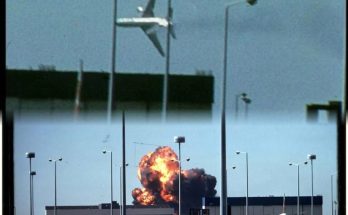
On August 3, 2016, a terrifying aviation accident unfolded at Dubai International Airport when Emirates Flight EK521, arriving from Thiruvananthapuram, India, crashed during an attempted go-around and was engulfed by fire. All 300 people aboard the Boeing 777 survived the accident, but the tragedy claimed one life on the ground: a firefighter who was responding to the emergency and attempting to protect those trapped in the burning aircraft.
The accident remains one of the most remarkable and heartbreaking incidents in Emirates’ history. It is remembered not only because every passenger and crew member escaped the aircraft, but also because a member of the emergency response team made the ultimate sacrifice while trying to save others.
The original headline circulating online describes the event as a “sad news” story, but the facts deserve careful treatment. The UAE’s General Civil Aviation Authority (GCAA) confirmed that a firefighter died during rescue and firefighting operations after an explosion occurred. The official investigation later examined the chain of events that led to the crash and identified several factors involving the attempted go-around, flight-crew monitoring and reliance on automation.
A Routine Flight Turns Into a Disaster
Emirates Flight EK521 was a scheduled passenger service operated by Emirates using a Boeing 777-300, registered A6-EMW. The aircraft was flying from Trivandrum International Airport in southern India to Dubai International Airport.
There were 282 passengers and 18 crew members, making a total of 300 people aboard. According to the official preliminary investigation, the aircraft accident occurred at approximately 08:37 UTC on August 3, 2016, equivalent to about 12:37 p.m. Dubai time.
As the aircraft approached Dubai, conditions were challenging. The crew had received a windshear warning through the airport’s automatic terminal information system. The aircraft approached Runway 12L and initially appeared to be landing normally.
But in the final moments, the situation changed dramatically.
The aircraft touched down briefly before the pilots attempted to go around. According to the investigation, the aircraft subsequently climbed only to approximately 85 feet above the runway before losing energy and descending again. It struck the runway and slid for approximately 800 metres before coming to rest.
Then came the fire.
The Fire That Changed Everything
The Boeing 777 was severely damaged in the impact. Fire rapidly spread through the aircraft, creating an extremely dangerous environment for passengers, crew members and emergency responders.
Yet the most extraordinary fact about the accident was that all 300 people aboard the aircraft were evacuated alive before the fire consumed the cabin. The official investigation recorded no passenger or crew fatalities. There were injuries, including serious and minor injuries, but the aircraft’s occupants escaped before the fire became fully destructive.
That successful evacuation was not simply a matter of luck.
Emergency crews responded to the aircraft almost immediately. Firefighters at Dubai International Airport rushed toward the burning Boeing 777 while passengers were still evacuating.
Their mission was clear: contain the fire, protect the airport and prevent additional deaths.
But the rescue operation itself became deadly.
During firefighting and rescue operations, an explosion occurred. One firefighter was fatally injured.
The GCAA later publicly confirmed the death and expressed condolences to the firefighter’s family. The authority emphasized that his actions had helped protect the people aboard the flight.
The Firefighter Who Became the Only Fatality
The death of the firefighter transformed the story from a miraculous mass survival into a deeply painful tragedy.
While 300 people aboard the aircraft escaped with their lives, the emergency responder who went toward the danger did not return.
Contemporary reporting identified the firefighter as Jasim Al Beloushi, an Emirati firefighter from Ras Al Khaimah. Gulf News reported that he died while responding to the aircraft emergency.
His death was especially poignant because firefighters were not responding to an ordinary airport incident. They were confronting a burning wide-body aircraft filled with fuel, damaged systems and rapidly changing hazards.
Aviation accidents can create dangerous conditions even after the aircraft has stopped moving. Fuel can ignite, pressurized systems can rupture, structural components can collapse, and explosions can occur without much warning.
That was the environment in which the firefighters worked.
The GCAA’s director general, Saif Mohammed Al Suwaidi, offered condolences to the deceased firefighter’s family and praised his courage. The authority said his actions helped ensure the survival of everyone aboard the flight.
In that sense, EK521 became an unusual aviation tragedy: there were no fatalities among the passengers or crew, but there was a fatality among the people who came to rescue them.
What Happened Inside the Cockpit?
The initial reports focused on the dramatic crash and fire, but investigators spent years examining exactly why the aircraft failed to complete the go-around.
The UAE Air Accident Investigation Sector, operating under the GCAA, conducted a detailed investigation. Boeing, Rolls-Royce and Emirates provided technical assistance, while investigators examined flight data, cockpit recordings, aircraft systems and operational procedures.
The preliminary report was deliberately factual and did not immediately assign a cause. That is standard in aviation accident investigations.
The final report, issued in 2020, provided a much clearer picture.
According to the investigation, the flight crew did not effectively monitor the primary flight instruments during the landing and attempted go-around. Investigators also determined that the crew did not realize that the autothrottle had not moved the engine thrust levers to the required takeoff/go-around position after the commander pressed the TO/GA switch.
The aircraft had already touched down, even though the crew did not recognize the significance of that brief contact. Because of the aircraft’s system logic, the TO/GA switches were inhibited after touchdown, meaning the expected automatic thrust increase did not occur.
For several critical seconds, the engines therefore did not provide the power needed to sustain the aircraft.
The aircraft rose slightly, but its airspeed fell. Eventually, it began sinking back toward the runway.
The flight crew advanced the thrust levers only shortly before impact, but by then the aircraft did not have enough energy to recover.
The airplane struck the runway again, with its landing gear partially retracted, and slid along the surface.
A Disaster With an Extraordinary Outcome
When people hear the word “crash,” they often imagine that everyone aboard died.
EK521 was different.
The Boeing 777 was destroyed by the accident and subsequent fire, but the people inside managed to escape.
The official preliminary report recorded 282 passengers and 18 crew members aboard. It also recorded 24 injuries among passengers and crew, including one serious injury and 23 minor injuries. In addition, one firefighter died.
That means the evacuation was enormously important.
A burning Boeing 777 can become an extremely dangerous environment in a matter of minutes. Smoke, flames, damaged exits, confusion and limited visibility can quickly turn an accident into a mass-casualty event.
The fact that everyone aboard escaped before the fire consumed the cabin demonstrated the importance of emergency procedures and evacuation training.
But it also highlighted the extraordinary risks faced by airport firefighters.
Passengers were trying to get away from the flames.
Firefighters were running toward them.
A Hero Remembered
The story of EK521 is therefore not simply an aviation accident story.
It is also a story about emergency workers whose jobs require them to enter situations that others are desperately trying to escape.
Jasim Al Beloushi’s death became a symbol of that sacrifice.
While the passengers and crew were being evacuated, firefighters were positioning themselves around the aircraft and battling the consequences of the crash. The fatal explosion demonstrated how unpredictable the scene remained even after the aircraft had stopped.
For families of the passengers, the rescue operation ultimately meant that their loved ones came home.
For the family of the firefighter, however, the day brought unbearable loss.
That contrast is one of the most powerful aspects of the EK521 story.
Hundreds of families were able to embrace their loved ones again because the emergency response succeeded. One family, however, lost a husband, son or relative who had gone to work that day expecting to protect others.
Lessons From EK521
The investigation into EK521 did more than determine what happened to one aircraft.
Air accident investigations are intended to improve aviation safety and reduce the possibility of similar accidents happening again. The UAE investigation specifically stated that its purpose was prevention rather than assigning blame or liability.
The final findings drew attention to flight-crew monitoring, automation and training for unusual go-around situations.
The accident demonstrated how quickly a highly automated aircraft can become difficult to manage when pilots encounter a situation that differs from what they expect.
It also demonstrated why pilots must continue monitoring fundamental flight parameters even when automation is being used.
Automation can reduce workload, but it cannot replace human awareness.
In EK521, the difference between a successful go-around and a devastating runway impact unfolded within seconds.
Remembering August 3, 2016
Years after the accident, EK521 continues to be remembered as one of the most significant accidents involving an Emirates aircraft.
The aircraft itself was destroyed.
The passengers survived.
The crew survived.
But one firefighter did not.
That fact should never be lost beneath the technical details of the investigation.
The crash is often discussed in terms of aircraft systems, autothrottle logic, go-around procedures, runway impact and pilot performance. Those details are important because understanding them can help prevent another accident.
But behind those technical findings was a human story.
On August 3, 2016, hundreds of people faced a terrifying emergency at Dubai International Airport. Emergency responders immediately moved toward the danger. Their actions helped create the conditions in which everyone aboard the aircraft could survive.
One firefighter paid the ultimate price.
The official investigation confirmed that the accident resulted in the destruction of the Boeing 777, but it also confirmed something remarkable: every passenger and crew member escaped alive before the fire consumed the aircraft.
That is why the story of Emirates Flight EK521 carries two emotions at once.
It is a story of fear and destruction.
But it is also a story of survival, courage and sacrifice.
For those who survived, August 3, 2016 became a day they would never forget.
For the family of Jasim Al Beloushi, it became the day they lost someone who had gone into danger so that others could live.
And for aviation safety professionals, EK521 remains a reminder that accidents rarely have a single dimension. Behind every investigation are people, decisions, systems, emergency crews and families whose lives can be changed in seconds.
The legacy of Flight EK521 is therefore not only the image of a burning aircraft on a Dubai runway.
It is also the memory of the people who escaped—and the firefighter who did not.
His sacrifice remains one of the most painful chapters in the story of an accident in which all 300 people aboard the aircraft survived.
Sources
- UAE General Civil Aviation Authority / Air Accident Investigation Sector — Preliminary Report AIFN/0008/2016.
- Emirates News Agency (WAM), reporting on the GCAA preliminary report.
- International Civil Aviation Organization, documentation relating to the EK521 final investigation.
- Gulf News, contemporary reporting on the firefighter’s death.
- The National, contemporary reporting on the crash and emergency response.