The Mysterious Stripes on Your Bath Towels That Almost Everyone Gets Wrong
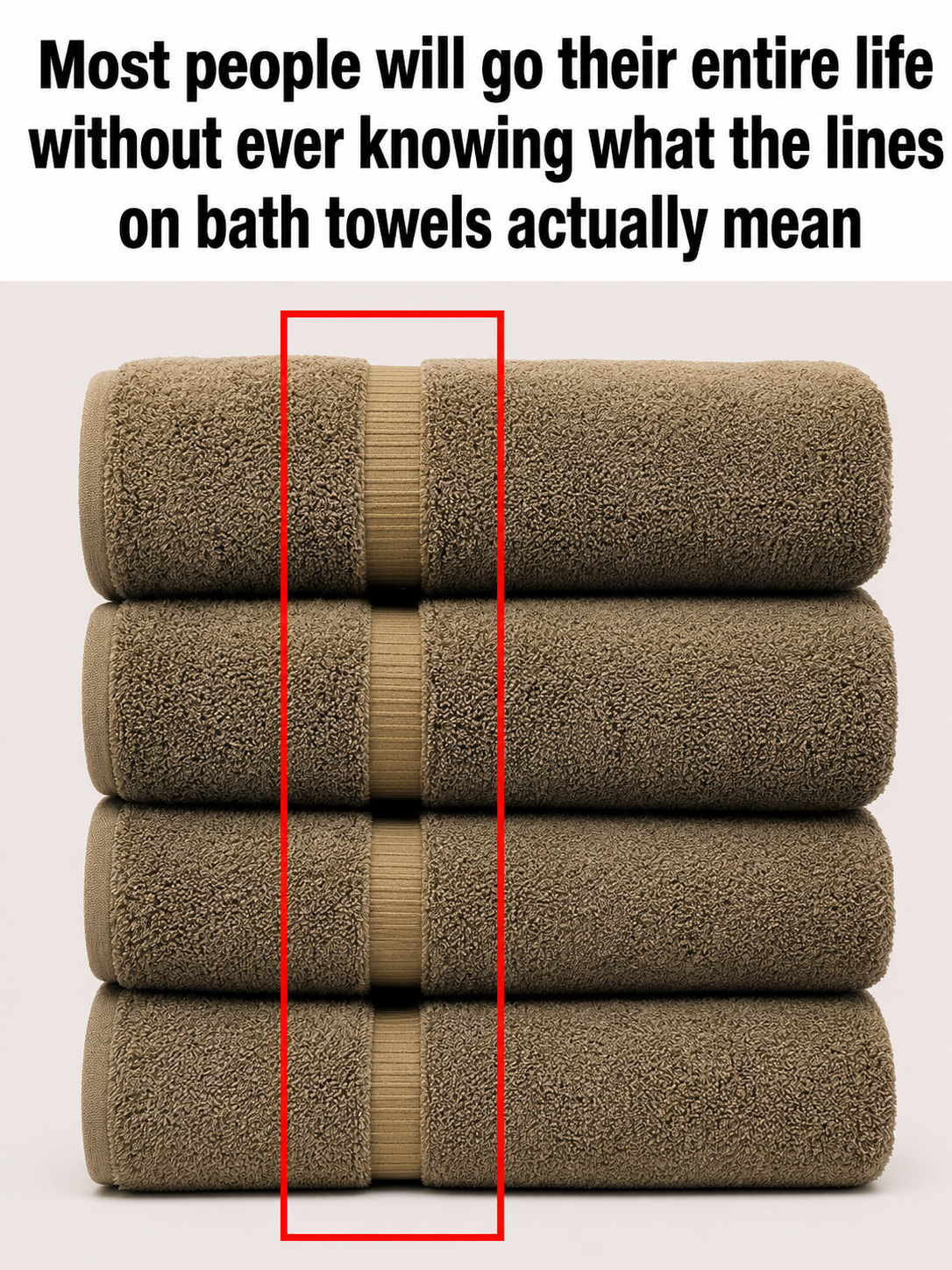
Walk into almost any home, hotel, or vacation rental, and you’ll find bath towels with a familiar design. They come in different colors, sizes, and levels of softness, but most share one curious feature that few people ever stop to question—a raised horizontal stripe or textured band running near each end of the towel.
It’s so common that most of us barely notice it anymore.
Yet recently, this seemingly ordinary detail has become the subject of millions of views across social media. Videos, memes, and discussion threads have filled the internet with people trying to explain what that mysterious stripe is actually for.
Some joked that it marks the section of the towel meant for drying your face while the rest is reserved for your body. Others claimed it was simply a decorative “racing stripe” added to make towels look more luxurious. A few even suggested it existed only to help manufacturers fold towels more neatly on store shelves.
While these theories are entertaining, none of them explain why nearly every major towel manufacturer around the world continues to include this feature, regardless of the towel’s price or style.
The real answer is much more interesting.
That mysterious stripe is called a dobby border, and it is one of the most important engineering features built into a quality towel. Although it appears decorative, it serves several practical purposes that help the towel perform better, last longer, and maintain its shape through years of regular use.
At first glance, a towel seems incredibly simple. It’s just cotton fabric designed to absorb water. But modern bath towels are carefully engineered products. Every loop, stitch, weave, and border is designed with durability and performance in mind.
The fluffy part of the towel is made from thousands of tiny cotton loops called terry cloth. These loops dramatically increase the surface area of the fabric, allowing the towel to soak up large amounts of water. However, those same loops also make the towel flexible and prone to stretching, especially after repeated washing and drying.
Every time you pull a towel off a rack, twist it to dry yourself, wash it in hot water, or tumble it in a dryer, the fibers experience stress. Over time, this constant stretching can cause towels to lose their original shape. The edges may begin to curl, the fabric may warp, and the towel can become uneven or difficult to fold neatly.
This is where the dobby border comes in.
Unlike the fluffy terry loops, the dobby border is woven much more tightly using a flatter weaving technique. This dense section acts almost like a structural frame for the towel. It provides stability, helping distribute tension across the fabric whenever the towel is pulled, folded, washed, or dried.
Instead of allowing all the stress to concentrate on the absorbent loops, the reinforced border helps maintain the towel’s overall shape. This simple design reduces stretching, prevents distortion, and helps the towel remain flat even after hundreds of laundry cycles.
The border also serves another important purpose: it protects the edges of the towel.
Without reinforcement, the edges are the first areas to wear out. They receive the most friction from washing machines, dryers, towel racks, and everyday handling. A tightly woven border strengthens these vulnerable areas, reducing fraying and helping the towel withstand years of use.
Another benefit is improved manufacturing consistency. During production, the dobby border provides a stable section that allows towels to be cut, sewn, and hemmed more accurately. This results in straighter edges and a more durable finished product.
It also makes folding easier. Hotels, spas, and commercial laundries appreciate towels with reinforced borders because they fold more uniformly, stack more neatly, and keep their shape after repeated laundering.
Perhaps surprisingly, the border can even contribute to drying performance. Because the woven band contains fewer thick loops than the rest of the towel, moisture can evaporate more quickly from that section. This helps the towel dry more evenly after use, reducing the amount of time it stays damp.
Keeping towels drier between uses has another advantage—it can discourage the growth of mildew and reduce the musty odors that often develop when towels remain wet for long periods.
This small strip of fabric may not seem important, but over the life of a towel, it can make a noticeable difference. A well-designed towel that maintains its shape, resists fraying, and survives hundreds of wash cycles doesn’t need to be replaced as often. That means fewer purchases over the years, saving money while also reducing textile waste.
In other words, that simple woven stripe isn’t just decoration—it’s an investment in durability.
The recent online fascination with towel stripes is a reminder of how easily we overlook thoughtful design. Many everyday objects contain hidden engineering that quietly improves their performance without drawing attention to itself. Because these features work so well, we rarely stop to ask why they’re there.
The next time you reach for a bath towel, take a closer look at that textured band near the edge. What appears to be a simple decorative stripe is actually a carefully engineered component that helps the towel stay stronger, last longer, dry more efficiently, and continue performing its job for years.
Sometimes, the smartest innovations aren’t flashy or high-tech. They’re the subtle design details that have been hiding in plain sight all along, quietly making everyday life just a little bit better.