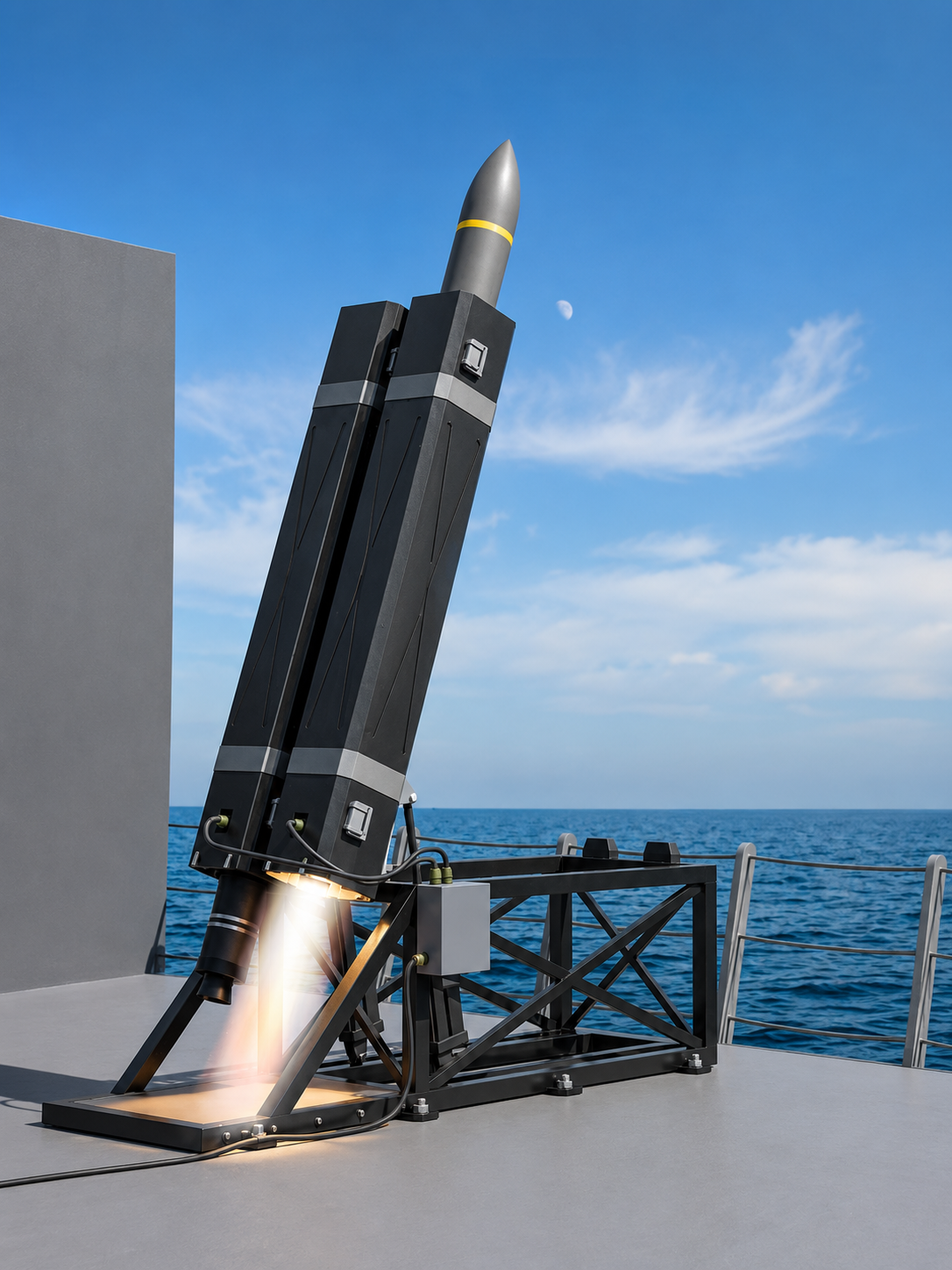
U.S. Navy Orders Low-cost Missiles to Expand Fleet, Allied Long-Range Maritime Strike Capabilities
The U.S. Navy is procuring a low-cost cruise missile to expand the fleet’s long-range precision strike capabilities and provide allies with affordable maritime strike munitions.
CoAspire announced its selection for the Navy’s Coalition Heterogenous Affordable Offensive Strike (CHAOS) program this week. The Assistant Secretary of the Navy for Research, Development and Acquisition also confirmed the award in a Thursday social media post on LinkedIn.
The American defense firm was awarded $70 million through Other Transaction Authority for the development of its Rapidly Adaptable Affordable Cruise Missile-Extended Range (RAACM-ER) for the sea service’s requirements. According to CoAspire, the RAACM-ER can be launched from land, air and sea platforms against maritime targets at ranges up to 1,000 nautical miles.
This low-cost cruise missile has already been tapped by the Army and Air Force in recent months. The orders come amid a rush to replenish stockpiles exhausted in the U.S. war with Iran and in an effort to bolster long-range strike capabilities that are needed to counter China in a potential conflict.
Portfolio Acquisition Executive Munitions will also award another defense firm for the CHAOS program. The recently unveiled Navy missile initiative aligns with the Coalition Affordable Maritime Strike (CAMS) program. This 2024 program received proposals from CoAspire and other firms that were selected for Army and Air Force low-cost munition efforts.
CAMS aimed to deliver a $1.5 million missile capable of striking maritime targets at least 140 nautical miles away with a 500-pound warhead. Its envisioned production rate of between 250 to 1,000 units a year was influenced by requirements to support Washington’s partners in the North Atlantic Treaty Organization and other allies in the Pacific. CAMS’ first contract was slated to be selected within the first quarter of fiscal year 2027.
With the importance of long-range precision munitions emerging following conflicts across the Middle East and Ukraine, Washington has looked to new and traditional defense contractors to supplement its Cold War stockpiles. In recent years, the Pentagon has signed numerous agreements to bolster defense industrial base production, procure missiles by the tens of thousands and develop next-generation long-range strike systems.
American allies in need of maritime strike systems have run into procurement issues. Stemming from an insufficient production base, American requirements and legacy designs, countries such as Taiwan and Japan have found their orders of Cold War-derived Harpoon anti-ship and Tomahawk cruise missiles delayed. These systems would be crucial in a potential conflict with China, which now fields a large and modern fleet.